


Dongqi 10t Truss Double Girder Gantry Crane 12m Lift Sale Greece
$13800.00 1 set
Qingdao Shanghai
L/C T/T
New
Truss Gantry Crane
CE, ISO9001:2000
Dongqi
General manufacturing,Metal production industry,Renewable energy industry
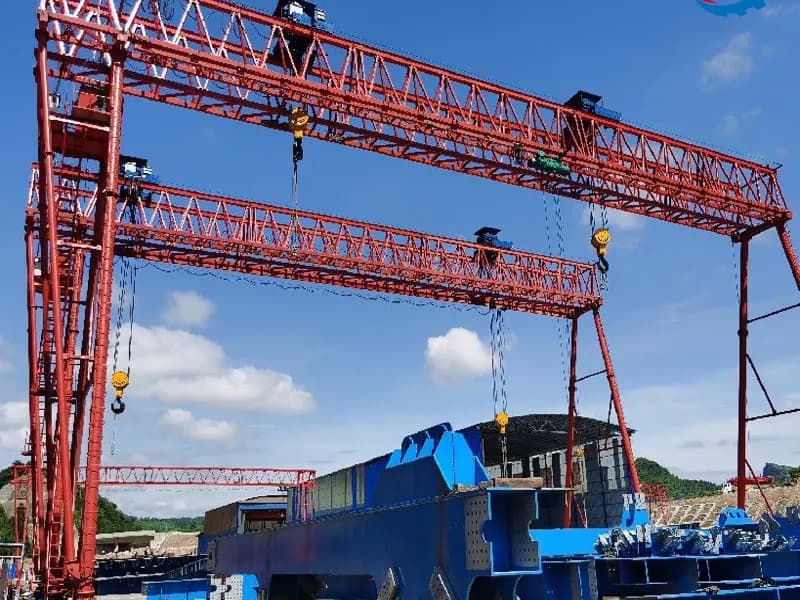
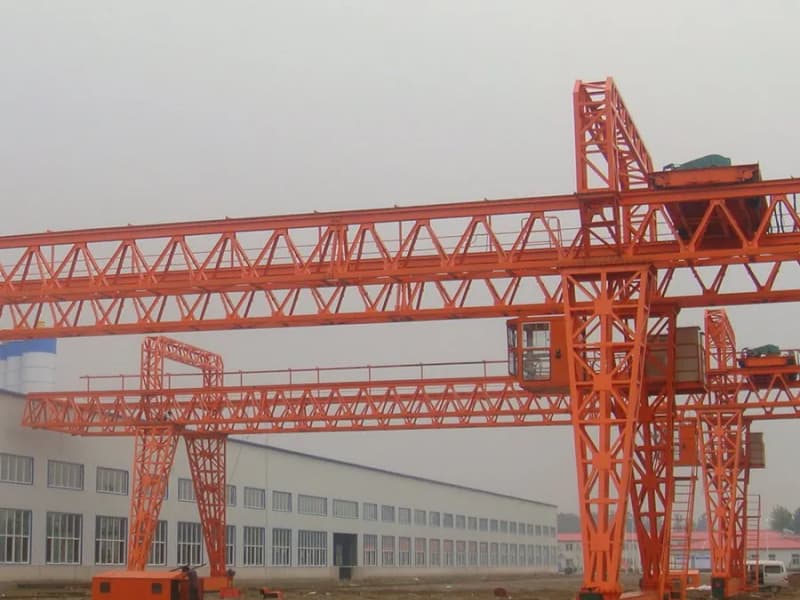
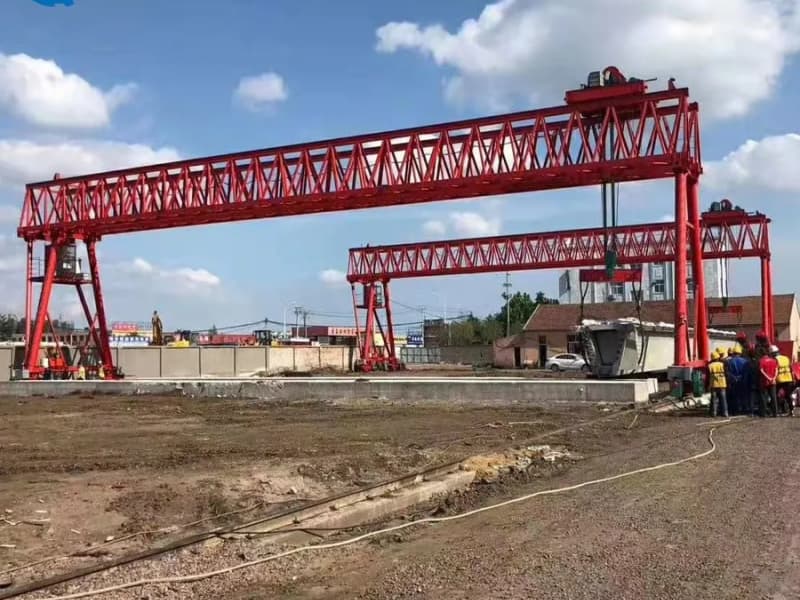
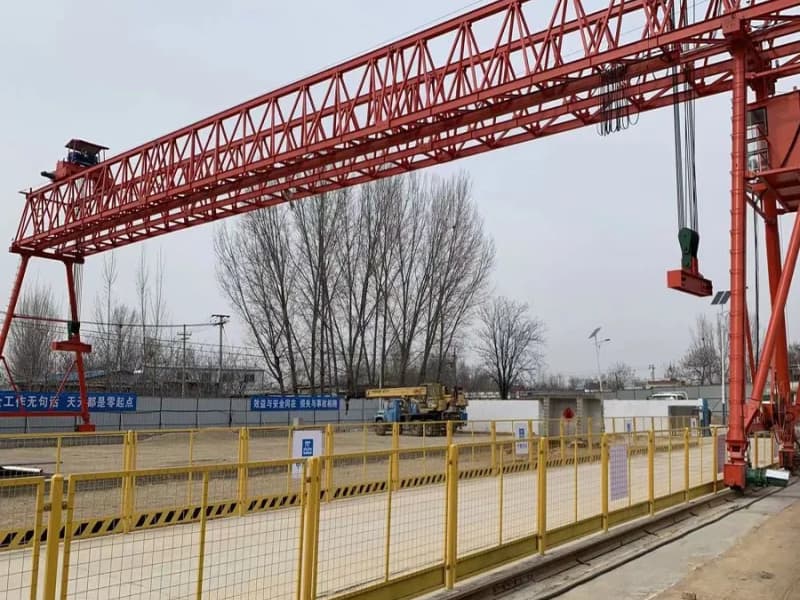
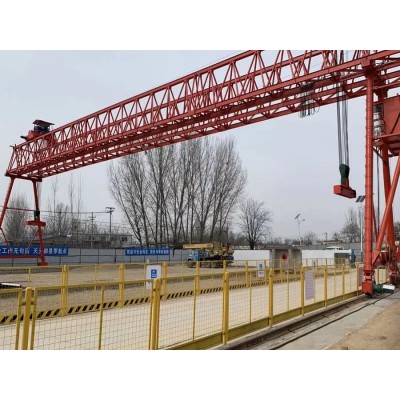
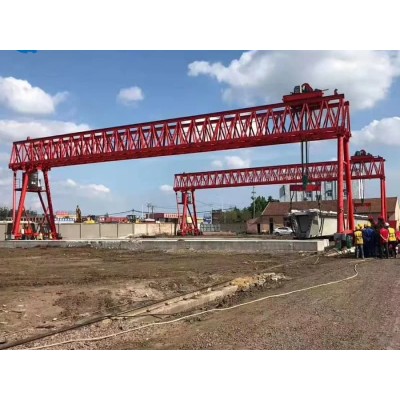
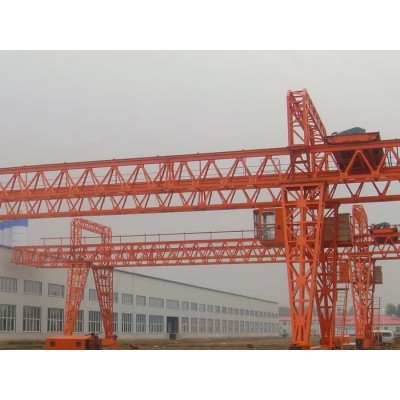
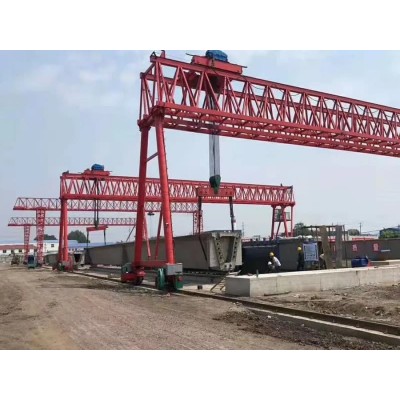
The truss girder double girder gantry crane from Dongqi Crane is a heavy-duty, self-supporting lifting system built around triangular truss main girders instead of conventional box sections. With a capacity range of 5 to 450 tons, it is engineered for the conditions that make box girder gantry cranes uneconomical or operationally limiting: high wind exposure, long spans, frequent relocation, and outdoor yards where structural weight directly affects foundation and transport cost.
The truss structure strengthens the overall frame while lightening dead weight and enhancing wind resistance . Compared with a box girder gantry crane of comparable capacity and span, the truss configuration presents a smaller windward area, which improves stability in working conditions and reduces the structural loads the crane must resist when parked . For outdoor material handling—steel yards, ports, shipyards, rail freight stations, and wind-exposed storage areas—this is not a marginal difference. It is the reason the truss girder configuration exists.
Dongqi supplies the truss girder double girder gantry crane with bolted or pinned connections at the main girder, legs, and ground beams, enabling convenient dismantling, transport, and re-erection . This makes the crane suitable not only for permanent installations but for projects where the lifting system must follow the work—precast yards, temporary stockyards, and construction sites with finite duration.
Why Truss Girder: The Structural Logic
A box girder resists bending through a closed hollow section. A truss girder resists bending through a triangulated framework of chords and diagonals. The engineering trade-off is straightforward:
Truss girders are lighter for the same span and capacity because the material is concentrated in the chords and diagonals where it resists axial force, rather than distributed around a closed perimeter.
Lighter dead weight reduces wheel loads and foundation requirements, which matters for outdoor rail systems where civil works can represent a significant share of project cost.
The open framework presents less surface area to the wind, reducing wind load on the crane structure and improving working-wind stability .
Bolted and pinned connections allow the crane to be broken down into transportable sections, which is often decisive for projects in remote locations or where the crane must be relocated between sites .
The truss girder double girder gantry crane is not a replacement for every box girder application. It is the correct choice when wind, weight, transport, or span makes the box girder configuration less practical.
Technical Specifications
Capacity note. The 5–450 t range represents the truss girder double girder platform envelope. For capacities approaching the upper limit, Dongqi reviews truss chord sizing, leg configuration, rail foundation, and wind loading together. The lifting mechanism selection (hoist vs. winch trolley) is confirmed against duty cycle and required lifting speed.
Design and Construction
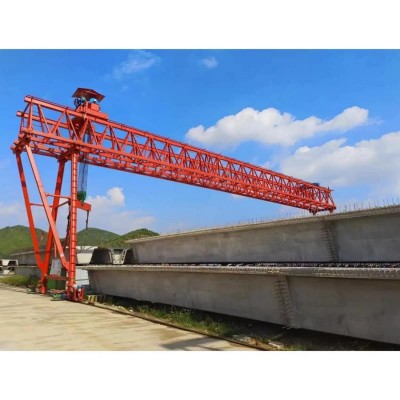
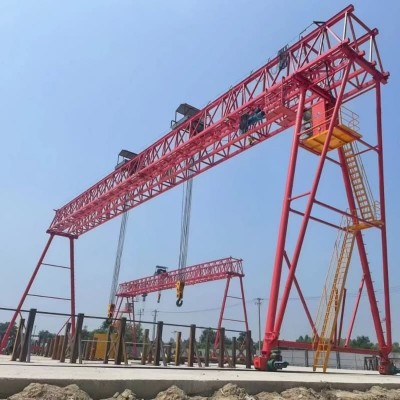
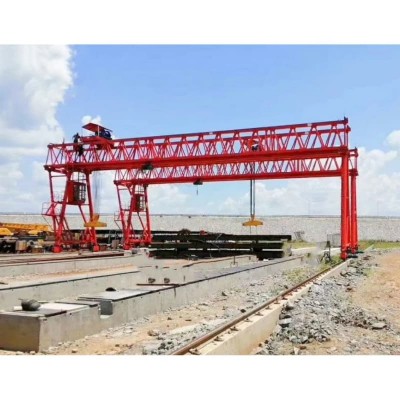
Triangular truss main girder
The main girders use a triangular truss configuration, with top and bottom chords connected by diagonal web members. This geometry provides high stiffness-to-weight ratio and is the basis of the crane‘s wind resistance and reduced dead weight . The truss is fabricated with thermal expansion seamless steel legs joined to the main girder and ground girder by bolts or pins, maintaining structural integrity while allowing disassembly .
Double girder configuration
The double girder arrangement places the trolley and lifting mechanism on tracks atop or between the two truss girders. This provides greater hook height and more stable load distribution than a single girder truss crane, and supports heavier capacities and wider spans. When the crane is supplied with a cantilever, a saddle is fitted to carry the cantilever loads; without a cantilever, no saddle is required .
Transport and erection
Both main and auxiliary legs can be dismantled for transport, saving shipping cost and enabling the crane to be moved between sites . The bolted/pinned connection philosophy extends through the structure: the crane arrives as transportable sections and is erected on site with alignment confirmed at each connection.
Lifting mechanism
The truss girder double girder gantry crane adopts an electric hoist or trolley as its lifting mechanism. The lifting system comprises motor, brake, reducer, drum, and pulley block; the motor drives the drum through the reducer to raise or lower the load via wire rope . For capacities and duties where a standard hoist is not the optimal selection, a winch trolley configuration is reviewed during engineering.
Performance Advantages
Wind resistance
Working wind resistance is Class 6, and non-working wind resistance is Class 11 . The truss structure’s reduced windward area is the primary contributor: less surface area means less wind force on the crane, improving both operational stability and parked safety. This is particularly relevant for ports, shipyards, coastal yards, and open storage areas where wind exposure is a design driver.
Light dead weight
The truss girder is lighter than a box girder of comparable span and capacity. Lighter dead weight reduces wheel loads on the rail system and foundation, lowering civil works requirements and making the crane more feasible on existing rail foundations with limited capacity.
Easy installation and removal
Bolted and pinned connections allow the crane to be dismantled, transported, and re-erected without cutting or field welding of primary structural members . This is a practical advantage for projects with staged construction, temporary lifting requirements, or multi-site deployment.
Stable structure
Despite the lighter weight, the triangular truss geometry provides a stable structure with the stiffness required for reliable trolley travel and load positioning . The open framework also simplifies inspection of structural members and connections.
Safety and Protection
The truss girder double girder gantry crane is supplied with protection devices configured to the working environment and duty:
Overload limiter — prevents lifting beyond rated capacity.
Height limit switches — limit upper and lower hook travel.
Travel limit switches — limit trolley and long-travel motion at extremities.
Buffers — at travel extremities and end approaches.
Anti-derailment devices — at end carriages.
Rail clamps — for outdoor installations where wind loading requires parking restraint (configuration-dependent).
Warning indicators — audible and visual alarms as configured.
Emergency stop — at the operator interface.
For outdoor installations, rainproof covers for lifting mechanism and electrical control boxes are recommended and supplied according to the environmental specification.
Control Options
Ground control — pendant or remote station for operator positioning at floor level .
Cabin control — available for larger spans or where an operator station is preferred .
Control mode is confirmed at configuration against visibility, span, and duty requirements.
Applications
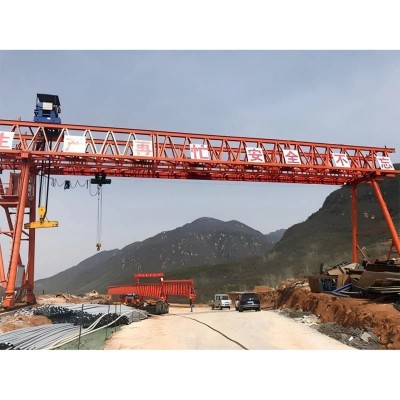
The truss girder double girder gantry crane is designed for outdoor material lifting and transporting where wind resistance, light weight, and transportability are operational requirements . Typical applications include:
Steel yards and stockyards — billet, slab, and coil handling with appropriate lifting attachments.
Ports and shipyards — heavy material handling in wind-exposed coastal environments.
Rail freight stations and logistics yards — loading, unloading, and transfer operations.
Precast concrete yards — lifting of forms, reinforcement cages, and finished elements.
Construction sites and temporary lifting projects — where the crane must be erected, dismantled, and relocated.
Open warehouses and storage areas — general outdoor material handling where a box girder crane would be over-weight or over-exposed to wind.
Mines and heavy fabrication yards — outdoor lifting in exposed conditions.
The truss girder configuration is particularly appropriate for sites with high wind exposure, projects requiring crane relocation, and existing rail foundations with limited load capacity.
Selection Guidance
| Application condition | Recommended truss girder direction |
|---|---|
| Outdoor yard with significant wind exposure | Truss girder double girder, Class 6 working wind resistance |
| Crane must be dismantled and relocated between sites | Truss girder with bolted/pinned connections |
| Existing rail foundation with limited wheel load capacity | Truss girder for reduced dead weight; verify wheel loads with Dongqi |
| Long span where box girder weight becomes prohibitive | Truss girder double girder, review chord and diagonal sizing |
| Capacity approaching 450 t | Review truss configuration, leg structure, and foundation together |
| Cantilever coverage required beyond the rail span | Specify cantilever and saddle arrangement |
| Coastal or corrosive environment | Enhanced coating system; confirm with Dongqi |
Dongqi reviews capacity, span, wind loading, rail foundation condition, transport constraints, and duty cycle together rather than quoting a truss gantry on capacity alone. The truss configuration is confirmed against the project’s specific wind and structural requirements.
Manufacturer: Dongqi Crane
Dongqi Crane designs and manufactures the truss girder double girder gantry crane as a wind-resistant, lightweight, transportable heavy lifting system. The company supplies truss cranes in single and double girder configurations, with customized proposals available within 12–24 hours based on project parameters . Dongqi’s product range includes European standard cranes, explosion-proof cranes, metallurgical cranes, and gantry cranes exported to 96 countries and regions .
Request a Configuration
To receive a matched truss girder double girder gantry crane proposal from Dongqi Crane, please provide:
Capacity required (t, 5–450 t range)
Span (m, center-to-center of rails)
Lifting height (m, hook travel required)
Working wind speed at the site and maximum wind speed for parked condition
Rail foundation condition (existing or new; load capacity if known)
Whether the crane will be relocated or permanently installed
Cantilever requirement (yes/no, and length if applicable)
Lifting attachment (hook, grab, magnet, or spreader)
Control preference (ground control or cabin)
Working environment (temperature, corrosion, dust)
Contact Supplier
Our Top Selling Products
LINKS : Dongqi Crane