


European Electric Hoist Parameters Explained | Technical Specifications & Selection Guide
European Electric Hoist Parameters Explained | Technical Specifications & Selection Guide
When purchasing a European electric hoist, many buyers struggle to understand technical specifications such as lifting capacity, lifting height, hoisting speed, duty classification, and motor configuration. Choosing the wrong parameters can lead to poor performance, safety risks, or compatibility issues with the overhead crane system.
This guide explains the most important European electric hoist parameters in simple terms, including technical specifications, structural dimensions, optional configurations, and selection tips. Whether you are an engineer, factory manager, or procurement specialist, this article will help you quickly understand how to choose the right European hoist for your application.
What Is a European Electric Hoist?
A European electric hoist is a low-headroom wire rope lifting device designed with compact structure, lightweight construction, smooth operation, and higher duty classification compared to traditional CD/MD hoists.
It is widely used in:
Steel structure workshops
Manufacturing plants
Warehouses & logistics centers
Machinery processing facilities
Heavy industrial production lines
Compared with conventional electric wire rope hoists, European hoists offer:
Smaller overall dimensions
Lower dead weight
Reduced noise levels
Frequency inverter control
Better lifting precision
Higher working efficiency
1. Core Parameters of European Electric Hoists
1.1 Rated Lifting Capacity
The rated lifting capacity determines the maximum load the hoist can safely lift.
Common European electric hoist capacities include:
0.5 ton
1 ton
2 ton
3 ton
5 ton
10 ton
16 ton
20 ton
32 ton
50 ton (customized)
For most industrial workshops, 1–10 ton hoists are the most commonly used. Heavy-duty industries such as steel fabrication and shipbuilding often require customized large-tonnage hoists.
Selection Tip
Always choose a hoist with enough safety margin based on the actual load weight and working frequency.
1.2 Lifting Height
Standard lifting heights usually include:
6 m
9 m
12 m
18 m
Customized lifting heights up to 30 m or more are available for:
High-rise workshops
Multi-level warehouses
Tall steel structure buildings
The lifting height should be selected according to the actual building clearance while reserving sufficient safety distance.
1.3 Hoisting Speed & Traveling Speed
Most modern European electric hoists use variable frequency drive (VFD) dual-speed control.
Typical hoisting speed ranges from 4 m/min to 6.8 m/min. Slow speed enables precise positioning, while fast speed improves overall working efficiency.
Typical traveling speed ranges from 10 m/min to 20 m/min.
Frequency inverter control provides:
Smooth starting and stopping
Reduced load swing
Lower mechanical impact
Better positioning accuracy
1.4 Duty Classification & Power Supply
European electric hoists generally use duty classifications:
A3
A4
A5
The higher the duty class, the more suitable the hoist is for frequent and continuous operation.
Typical industrial power supply:
380V
50Hz
3-phase
Customized voltages are available for international projects and special regional requirements.
2. Structural & Dimensional Parameters
One of the biggest advantages of European electric hoists is their low-headroom design and compact structure.
2.1 Compact Size & Lightweight Design
Compared with traditional wire rope hoists:
Overall weight is reduced by approximately 30%
Structural dimensions are smaller
Less pressure is applied to the crane beam
More usable lifting space is available
This makes European hoists especially suitable for:
Low-clearance workshops
Steel structure buildings
Limited-space industrial plants
2.2 Rail Compatibility & Installation Methods
European hoists can be installed on:
I-beams
H-beams
Monorail tracks
Overhead crane girders
Common installation types include:
Trolley type
Fixed type
Suspension type
Low-headroom type
Wheel spacing and track dimensions can be customized according to customer requirements.
2.3 Motor & Braking System
Modern European electric hoists are equipped with:
Pure copper motors
Frequency inverter motors
IP55 protection level
Electromagnetic braking systems
Advantages include:
Low operating noise
Better heat dissipation
Longer service life
Immediate braking after power failure
Prevention of hook slipping and load dropping
3. Optional Configurations for Special Applications
Different working environments require different hoist configurations.
3.1 Explosion-Proof & Anti-Corrosion Options
For hazardous environments such as:
Chemical plants
Dusty workshops
Explosive gas environments
Explosion-proof European hoists can reach:
Ex d II BT4 protection standard
For outdoor or humid environments:
Galvanized anti-rust treatment
Rainproof covers
Corrosion-resistant coatings
These configurations significantly extend service life.
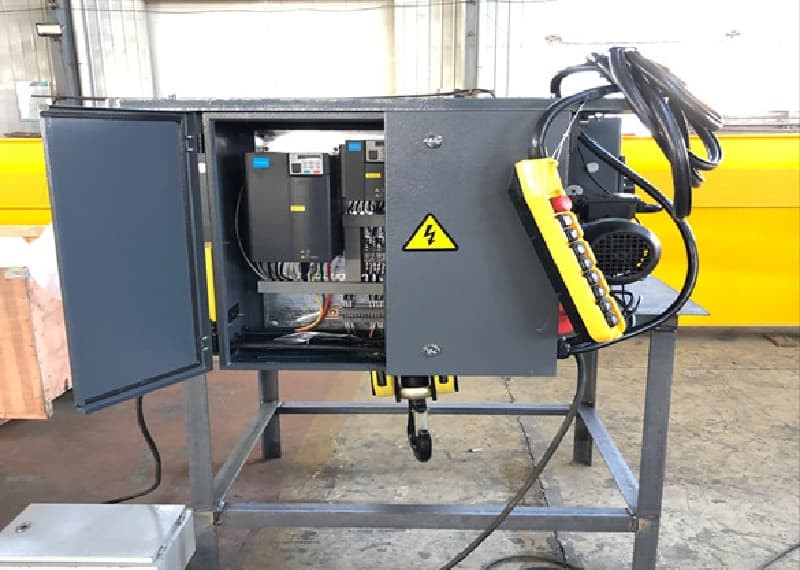
3.2 Variable Frequency Control & Intelligent Protection
High-end European hoists often include:
Full-frequency speed regulation
Soft start & soft stop
Overload limiter
Upper/lower limit switches
Emergency stop protection
Phase-loss protection
These safety systems help prevent:
Overloading
Collision damage
Top-hooking accidents
Electrical failures
4. European Hoist vs Traditional Wire Rope Hoist
Many buyers compare European electric hoists with traditional CD/MD wire rope hoists.
European electric hoists feature a more compact and lightweight structure, while traditional hoists are usually larger and heavier. Low-headroom design allows European hoists to save more vertical space, making them ideal for low-clearance workshops.
European hoists commonly use variable frequency speed control, providing smooth and stable operation with less load swing. Traditional wire rope hoists are often single-speed models, which may produce stronger impact during starting and stopping.
In terms of duty classification, European electric hoists can support frequent and continuous operation up to A5 working class, while conventional hoists are more suitable for intermittent use.
For modern industrial applications requiring high efficiency and stable operation, European electric hoists are generally the preferred solution.
5. How to Select the Right European Electric Hoist
Choosing the right hoist is not only about lifting capacity. Multiple factors should be considered.
Workshop Height
Determine the required lifting height while reserving enough safety clearance.
Track Specifications
Measure:
Beam width
Rail type
Wheel load capacity
Working Frequency
For continuous or production-line lifting operations, choose:
A5 duty classification
Variable frequency control
Working Environment
For outdoor, humid, or explosive environments:
Use anti-corrosion treatment
Select explosion-proof configuration
Precision Requirements
For precision machinery handling, dual-speed or VFD control is highly recommended.
6. Frequently Asked Questions (FAQ)
Q1: What is the maximum capacity of a European electric hoist?
Standard production models range from 0.5 ton to 32 ton, while customized designs can reach 50 ton or more.
Q2: How much space can a low-headroom hoist save?
Compared with traditional hoists, European low-headroom hoists can save approximately 20%–35% of upper lifting space.
Q3: Can European electric hoists be used outdoors?
Yes. Outdoor use requires:
Rainproof protection
Anti-corrosion treatment
Weather-resistant electrical components
Q4: What is the typical warranty period?
Most professional manufacturers provide:
1-year complete machine warranty
2-year warranty for core components such as motors and reducers
7. Conclusion
European electric hoists are widely recognized for their:
Low-headroom structure
Lightweight design
Smooth operation
High safety performance
Efficient frequency control
They are extensively used in manufacturing, steel structure workshops, warehouses, logistics centers, and heavy industrial applications.
Understanding technical parameters such as lifting capacity, lifting height, duty classification, speed control, and environmental configurations is essential for selecting the right hoist system.
If you need customized European electric hoists, technical drawings, or detailed specification sheets, it is recommended to contact a professional manufacturer for a one-to-one selection solution.