


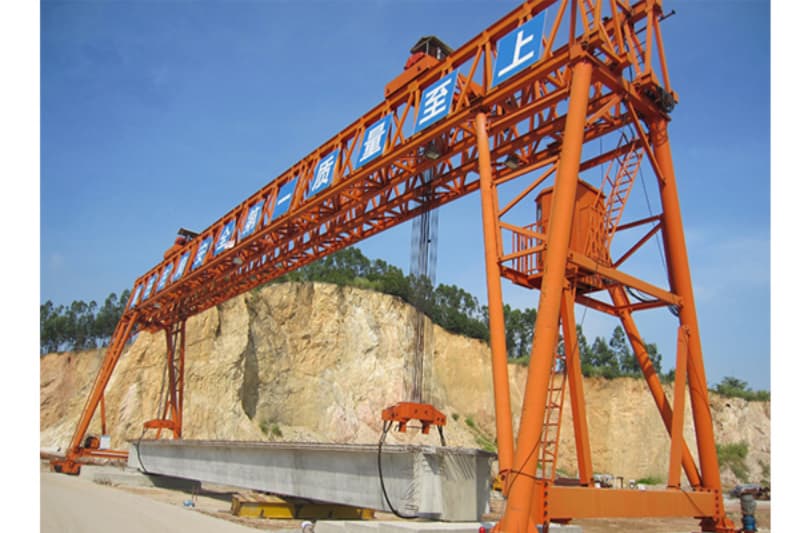
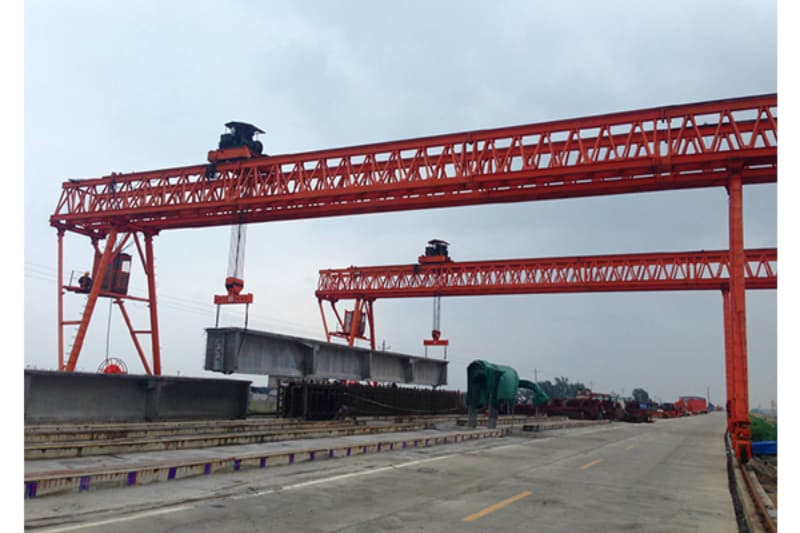
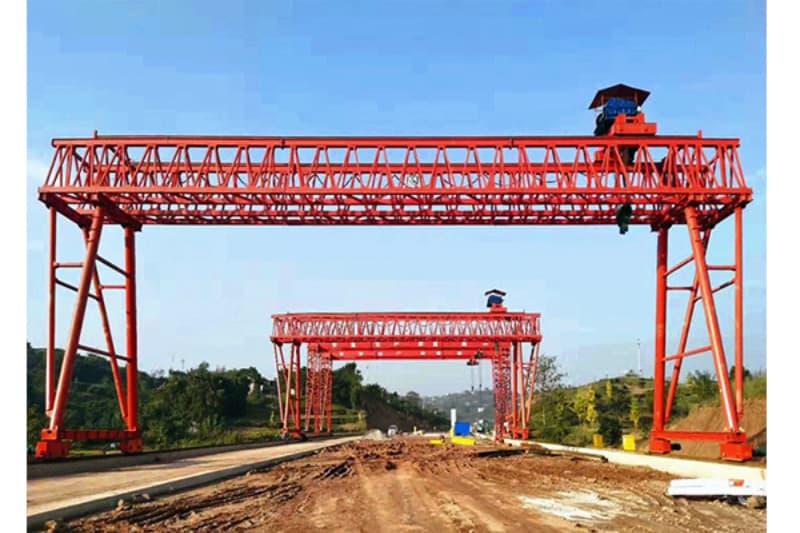
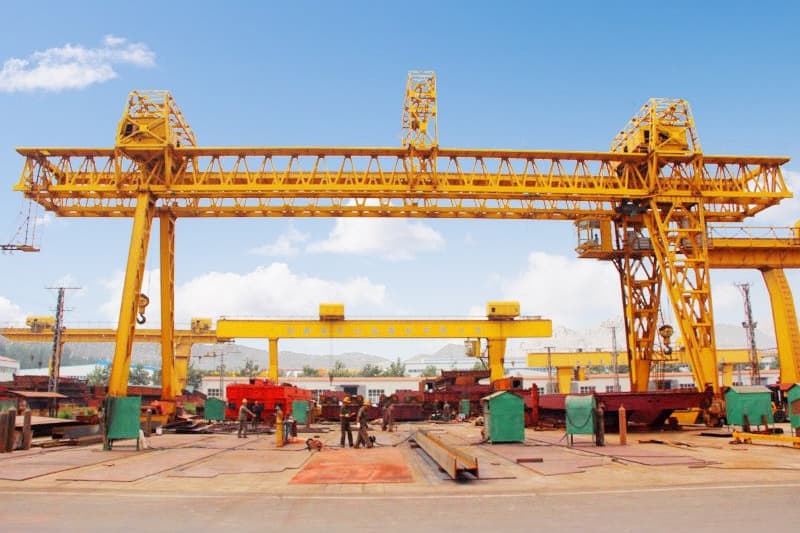
5t Truss Girder Double Girder Gantry Crane 12m Lift 26m Span Germany
$15600.00 1 set
Qingdao Shanghai
L/C T/T
New
Truss Gantry Crane
CE, ISO9001:2000
Yuantai
General manufacturing,Metal production industry
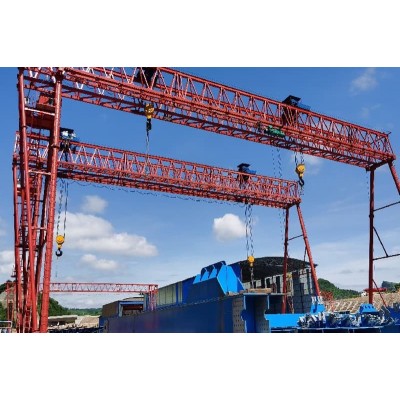
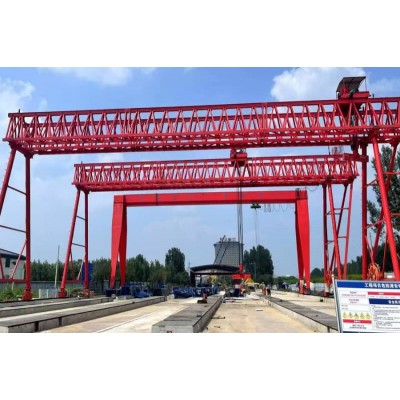
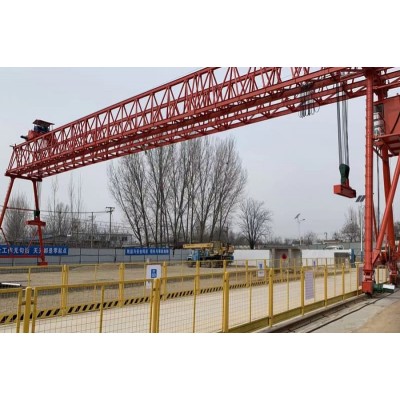
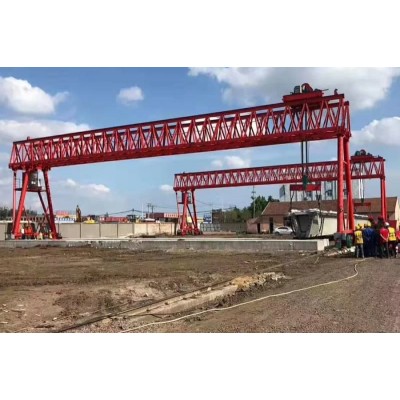
Truss Type Double Girders Gantry Crane for Outdoor Use
A brief introduction:
Gantry cranes, as a variation of bridge cranes, inherit the main characteristics and performance advantages of bridge cranes. In practical operation, they also exhibit the following advantages: First, the lifting structure relies on rails, eliminating traditional sources of failure such as tire-mounted trolleys or diesel generator sets, thus reducing the failure rate during crane operation. Second, gantry cranes are mostly electrically driven, eliminating the need for oil changes during operation, effectively controlling maintenance consumables, reducing maintenance costs, and resulting in low costs and significant economic benefits. Third, during rail-based lifting, the rails remain fixed, and with the trolley positioning device, deviation problems are avoided under high loads, resulting in a high level of automation. Finally, during operation, gantry cranes are directly connected to a high-voltage power supply. When the mechanism is not in operation, there is virtually no noise or air pollution. Furthermore, energy feedback devices can be introduced to achieve energy feedback during the lowering of the lifting mechanism, achieving energy conservation.
Double-girder gantry cranes have a simple structure, are easy to manufacture and install, and have a small weight. The main girder is often an off-center box-girder structure. Compared to double-girder gantry cranes, the overall rigidity is slightly weaker. Therefore, this type can be used when the lifting capacity Q >00t and the span S ≤ 35m.
According to application, rail-mounted gantry cranes mostly adopt box-type and truss-type structures and are the most widely used. They can handle various packaged goods and bulk materials, with lifting capacities below 100 tons and spans ranging from 4 to 39 meters. Ordinary gantry cranes using grab buckets have a higher working level. Ordinary gantry cranes mainly refer to hook, grab, electromagnetic, and hoist gantry cranes, and also include semi-gantry cranes.
Truss gantry cranes use a structure welded from angle steel or I-beams. Their advantages include low cost, light weight, and good wind resistance. However, due to numerous welding points and inherent defects in the truss itself, truss beams also have disadvantages such as large deflection, low rigidity, relatively low reliability, and the need for frequent weld inspection. They are suitable for sites with lower safety requirements and smaller lifting capacities.
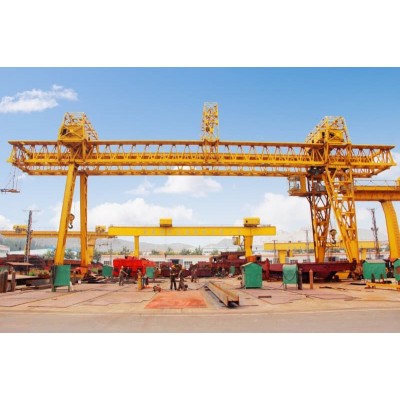
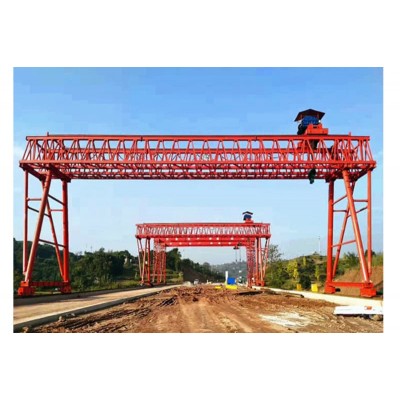
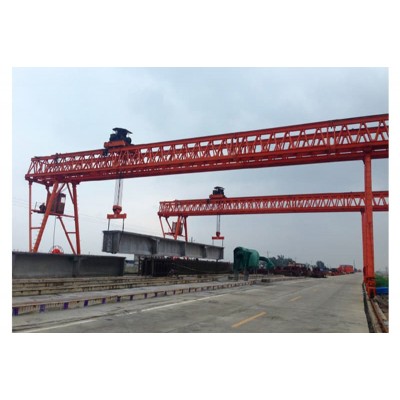
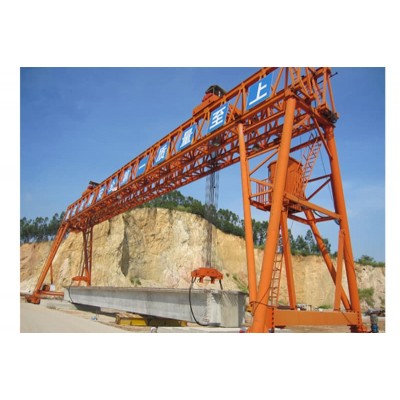
Products Show:


Drawings and Technical Specifications:
| Normal Capacity | 30-300 Tons. |
| Span | 10-25 Meters(Less Recommended); >25 Meters(Recommended) |
| Lifting Height | 2-20 Meters(Recommended); >20 Meters(Less Recommended) |
| Speed Control | Variable Frequency Drive(Standard) or Dual Speeds Control |
| Crane Operation | Pendant/Remote(Less Recommended); Cabinet(Recommended) |
| Power Supply | AC 3 Phases, 380V/400V/415V/440V; 50HZ/60HZ |
| Transmission & Brake System | 3-in-1 Motor-Gearbox-Brake System |
| Crane Power Supply | by Busbars(3 Live Wires, 1 Null Wire, 1 Ground Wire) |
| Hoist Type | Wire Rope Hoist. Electric Winch. |
| Hoist Power Supply | by cable |
| Dimensions | Please confirm if clear height of workshop is more than H+200 as shown above |
| Railways | >70Kg/m |
| Work Class | Heavy & Middle |
| Electric Control & Safety | Limit Switches; Overload Alarm; Fusion Protections; Phase Shortage Protections; Over-current/Currect Shortage Protections; Over-volt/Volt Shortage Protections; Isolated Protections. |
| Production Standard | ISO/FEM/DIN |
| Running Foundations | Steel Beams(Recommended) or Concrete Beams(Less Recommended) |
| Painting Color | Yellow(Standard) or Free Customized |
| Logo & Safety Words Painting | Free Customized |
| Applications | Outdoors |
| Usage Environment | Indoor(Recommended) or Outdoor(Less Recommended) |
| Protection Class | IP65/66 |
What we need to know before offering a right gantry crane:
What will the crane be used to do?
What is the capacity of the crane?
What is the span of the crane?
What is the lifting height of the crane?
What speeds are needed for the crane, single, dual or variable frequency control?
What is the control method for the crane, pedant, remote or cabinet?
What is the working duty of the crane? How long per day?
Where will the crane be used, indoor or outdoor? And the climate temperature?
What is the local power supply, phase, volt & frequency?
What quotation terms are preferable? EXW, FOB or CIF?
Contact Supplier
Our Top Selling Products
LINKS : Dongqi Crane