


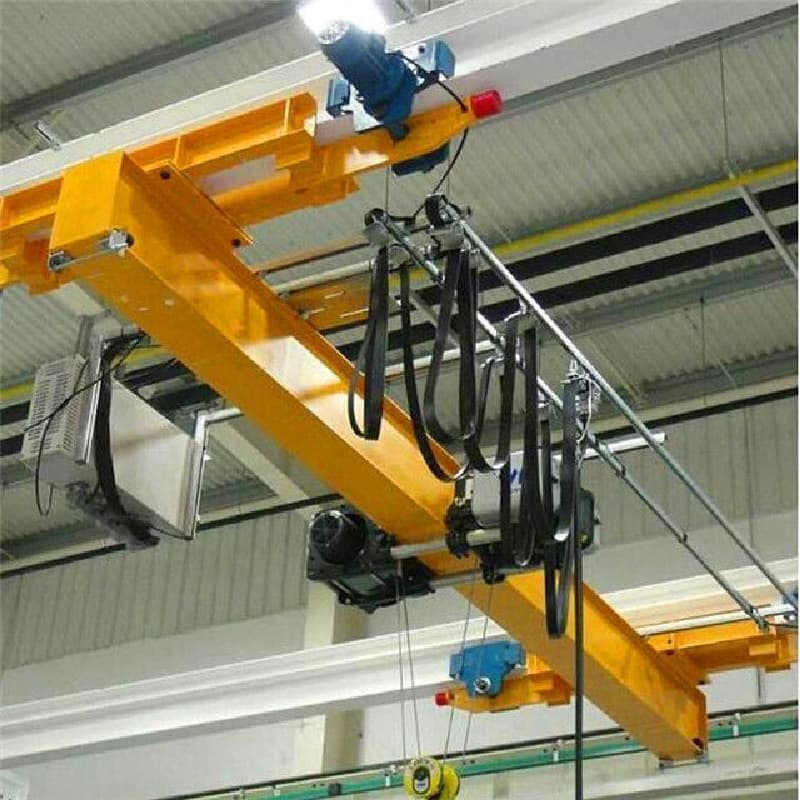
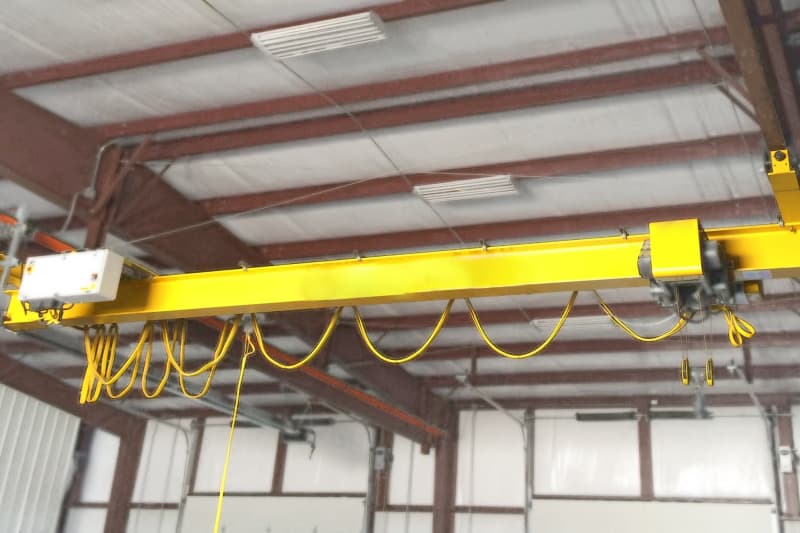
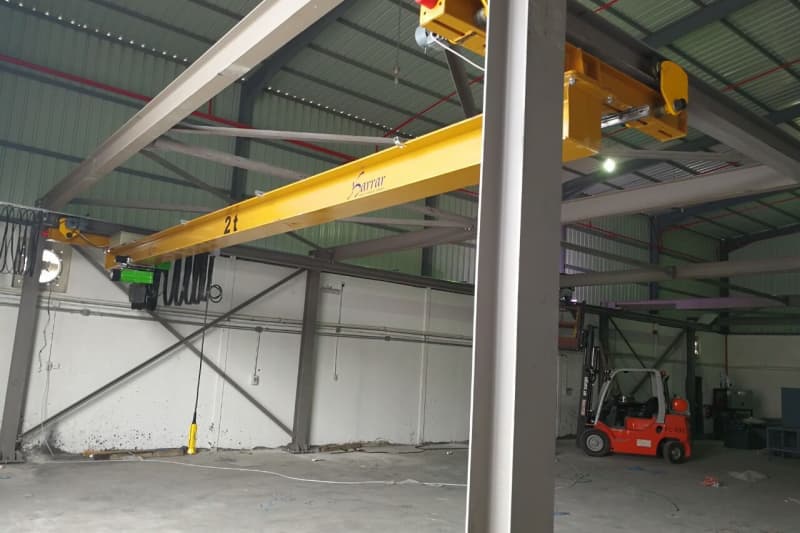
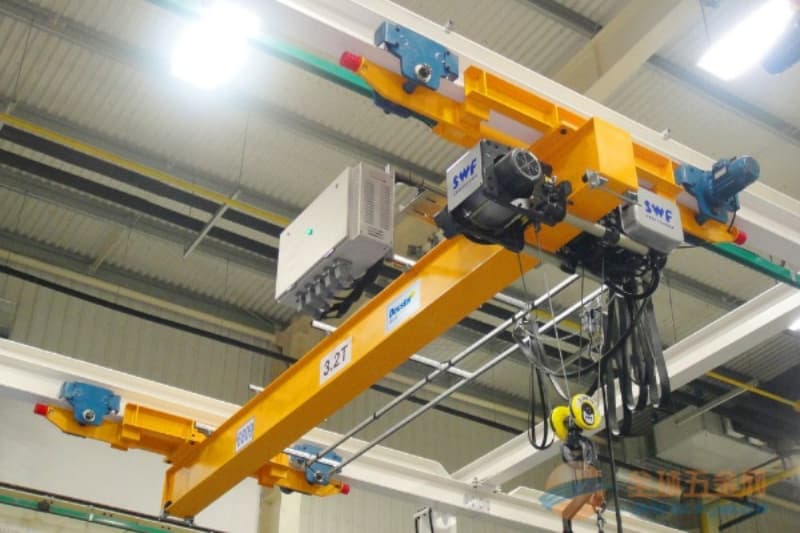
Dongqi 3t European Underhung Bridge Crane 15m Lift Factory Sale Madagascar
$3970.00 1 set
Qingdao Shanghai
L/C T/T
New
NLX
CE, ISO9001:2000
Dongqi
General manufacturing,Metal production industry,Renewable energy industry,Paper and wood industry
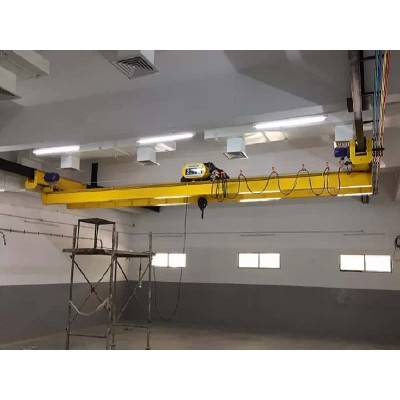
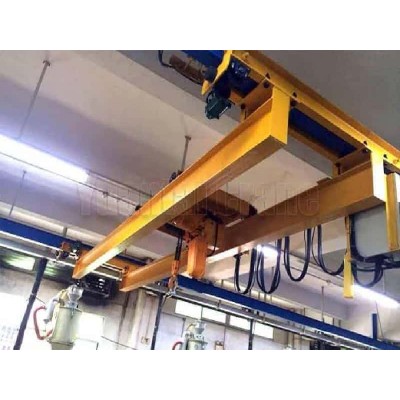
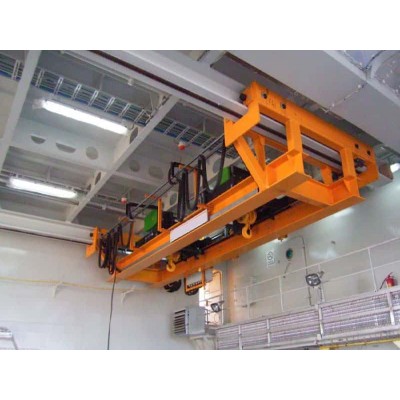
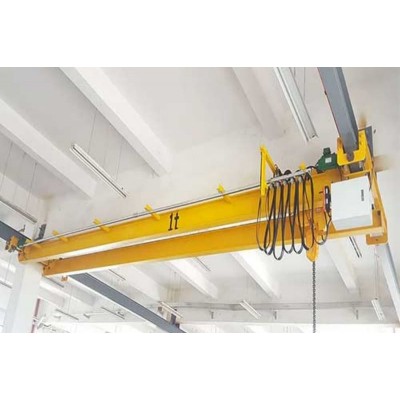
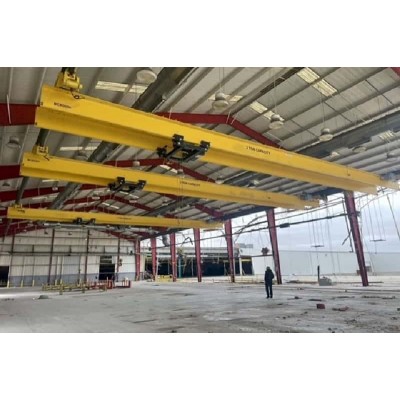
The NLX model European-spec electric underhung overhead crane from Dongqi Crane is a single-beam lifting system built around the ND/NR low-headroom electric hoist as its lifting mechanism. Unlike a top-running crane that sits on runway beams and consumes vertical space above the rails, the NLX runs suspended from the bottom flange of an I-beam runway attached to the roof structure or overhead steelwork. The crane body and hoist operate below the track, not above it.
This arrangement delivers what a top-running crane cannot in a constrained building: superior performance with safety and reliability, energy saving and high efficiency, low noise and environmental protection, combined with a compact structure and small limiting dimensions. The NLX is suitable for lifting and handling objects in workshops, warehouses, power stations, and similar workplaces where floor space must remain clear and vertical clearance is at a premium.
Design is based on FEM / DIN standards, with the modular, lightweight engineering logic that defines the European-spec crane family.
Why Underhung: The Structural and Spatial Advantage
An underhung crane changes the relationship between the crane and the building. The runway is supported by the roof supporting structure, without the requirement of extra floor columns to support the runway. This has several direct consequences:
No floor obstructions. The crane does not require free-standing columns along the bay, so floor space remains available for production equipment, storage, and vehicle movement.
Saves overhead space in low-headroom buildings. Because the crane runs below the track rather than on top of it, the design is specifically suited to areas with limited headroom and low ceilings.
Suitable for roof-supported structures and multiple crane systems. Underhung cranes are a practical solution for workshops with sloped ceilings or multiple crane systems, where top-running runways would be difficult to arrange.
Reduces building investment. Direct installation on the roof structure beam makes full use of the building’s remaining space and saves the investment in crane runway beams and additional supporting steelwork.
The NLX is not a compromise for light loads. It is the correct crane type when the building already exists, the roof can carry the load, and the objective is to extract lifting capability without modifying the floor or raising the roof.
Technical Specifications
| Parameter | NLX Single Girder Underhung Overhead Crane |
|---|---|
| Product name | Single Girder Underhung Overhead Crane |
| Model | NLX |
| Manufacturer | Dongqi Crane |
| Design standard | FEM / DIN (with ISO alignment) |
| Working class | A3–A5 (ISO M3–M5 equivalent), light to medium duty |
| Capacity | Up to 10 t (standard 1 / 2 / 3 / 5 / 10 t) |
| Span | 3–22.5 m |
| Lifting height | 6–30 m |
| Girder design | Single box-type welded girder / I-beam composite |
| Lifting mechanism | ND / NR low-headroom electric wire rope hoist |
| Power supply | 220–660 V, 50/60 Hz, 3-phase |
| Working temperature | −20 °C to +40 °C |
| Control method | Pendant / wireless remote |
| Hoist protection class | IP55, insulation class F, 40% duty cycle supported |
| Cantilever option | Lateral overhang available (typically 0.5–1 m) to extend hook coverage beyond the runway track line |
Working class note. A3–A5 covers light to medium-duty service typical of maintenance shops, warehouses, and general workshop handling. For higher cycling or heavier duty within the 10 t limit, Dongqi reviews hoist group and duty classification together with the roof load capacity rather than quoting a crane on capacity alone.
Design and Construction
The ND / NR low-headroom hoist as the lifting core
The NLX is developed around the ND/NR model low-headroom electric hoist, installed on the bottom flange of the main beam rather than on top of it. This is the mechanical basis of the crane’s low-headroom performance. The ND/NR hoist family is designed to FEM/DIN standards, with the low-headroom configuration allowing maximum effective use of the available lifting height. The NR type is equipped with a large-diameter drum, which effectively increases lifting height and reduces the left and right limiting dimensions. Hoist capacity in the wider ND/NR range extends well beyond the NLX crane limit, supporting the modular logic of the platform.
Structural and drive engineering
Main beam: box-type welded girder combined with I-beam construction; the beam and suspension structure use high-strength bolted connections for lifelong stability and reliability.
End carriage: optimized underhung end carriage designed to run on the bottom flange of the runway beam.
Drive: integrated transmission — motor, brake, and hardened-gear reducer combined into a compact unit, with frequency conversion speed regulation for stable operation.
Motor: high-protection drive with IP55 rating and insulation class F, supporting a 40% duty cycle.
Silent drive: the three-in-one mechanism with frequency conversion reduces equipment noise, making the crane suitable for workplaces where low noise and environmental protection are operational requirements.
Performance Advantages
Compact structure, small limiting dimensions
The underhung geometry and ND/NR low-headroom hoist minimize the crane’s own vertical envelope, increasing the effective working area and allowing lifting to begin closer to the roof structure.
Frequency conversion, stable operation
VFD control on hoisting and travel provides stepless speed regulation, soft start/stop, and reduced load swing, supporting precise positioning and smoother handling than single-speed or conventional two-speed systems.
Complete protection, safe and reliable
The NLX is supplied with an overload limiter, height limiter, stroke limiter, and photoelectric limiter, configured according to different working conditions. A crane black box with recorded analysis functions can be added based on customer requirements. The black box provides operating data capture for maintenance planning and incident review.
Integrated transmission, energy saving and high efficiency
The all-in-one drive arrangement reduces transmission losses and wear points, contributing to energy efficiency and lower maintenance demand.
Silent drive, low noise and environmental protection
The frequency-converted three-in-one mechanism reduces equipment noise, aligning the crane with modern industrial environmental requirements.
Safety and Control
Standard and available safety provisions for the NLX include:
Overload limiter — prevents lifting beyond rated capacity.
Height limiter — limits upper and lower hook travel.
Stroke limiter — limits trolley and long-travel motion at extremities.
Photoelectric limiter — anti-collision protection between cranes on the same track, with adjustable reflection distance where specified.
Emergency stop at the operator interface.
Safety disc brake integrated into the compact geared motor drive.
Crane black box (optional) — recorded analysis functions for operating data.
Control options include pendant control and wireless remote control, with VFD interface integration across motion axes.
Applications
The NLX single girder underhung overhead crane is engineered for workplaces where floor space, headroom, or building structure constrains a conventional top-running solution. Typical applications include:
Workshops and maintenance shops — general lifting, assembly, and repair work under roof-supported runways.
Warehouses — loading, unloading, stacking, and handling of light to medium goods, particularly in low-headroom storage areas.
Power stations and pump houses — maintenance lifting in auxiliary buildings with limited vertical clearance.
Shipyards, marinas, steel mills, and military facilities — where the application requires clear floor space or overhead crane coverage without floor columns.
Sewage treatment plants and overhaul workshops — standard light-duty environments where the underhung arrangement avoids civil works.
Machinery manufacturing, metallurgy, petrochemical, port logistics, railway, civil aviation, food processing, paper, building materials, and electronics — the NLX platform is applied across precise material handling and assembly tasks in these sectors.
The NLX is particularly appropriate for existing buildings with roof-supported runways, for workshops where floor columns would obstruct production flow, and for low-ceiling facilities where a top-running crane would sacrifice too much hook height.
Selection Guidance
| Application condition | Recommended NLX direction |
|---|---|
| Low-headroom workshop or warehouse, capacity ≤ 10 t | NLX with ND/NR low-headroom hoist, A3–A5 |
| Existing roof structure with adequate load capacity | NLX underhung on roof-supported I-beam runway; verify roof load with Dongqi |
| Floor must remain clear of columns | NLX underhung configuration |
| Need hook coverage beyond the runway span | NLX with cantilever / lateral overhang (typically 0.5–1 m) |
| Precision positioning / reduced load swing | NLX with VFD + optional black box |
| Multiple cranes on the same track | NLX with photoelectric anti-collision limiter |
| Capacity approaching 10 t upper limit | Review hoist group, roof load, and duty together with Dongqi |
For any application near the capacity, span, or roof-load limit, Dongqi reviews crane geometry, roof structural capacity, hoist group, and available headroom together rather than quoting a crane in isolation.
Manufacturer: Dongqi Crane
Dongqi Crane designs and manufactures the NLX single girder underhung overhead crane around the ND/NR low-headroom electric hoist as the lifting mechanism, integrating the girder, underhung end carriage, hoist, and electrical controls as a matched FEM/DIN lifting system. Dongqi supports configuration review, roof-load interface checking, hoist selection, and the decision between a complete crane supply and a crane kit where local fabrication and installation capacity exists.
Request a Configuration
To receive a matched NLX proposal from Dongqi Crane, please provide:
Capacity required (t, up to 10 t)
Span (m, center-to-center of runway tracks)
Lifting height (m, hook travel required)
Available headroom below the roof structure or runway beam
Roof / runway support condition (existing structure, load capacity if known)
Working environment (indoor, temperature, special atmosphere)
Duty cycle (hours per day, shifts, load spectrum)
Control preference (pendant, wireless remote)
Whether cantilever coverage beyond the runway line is needed
Contact Supplier
Our Top Selling Products
LINKS : Dongqi Crane